
Gods
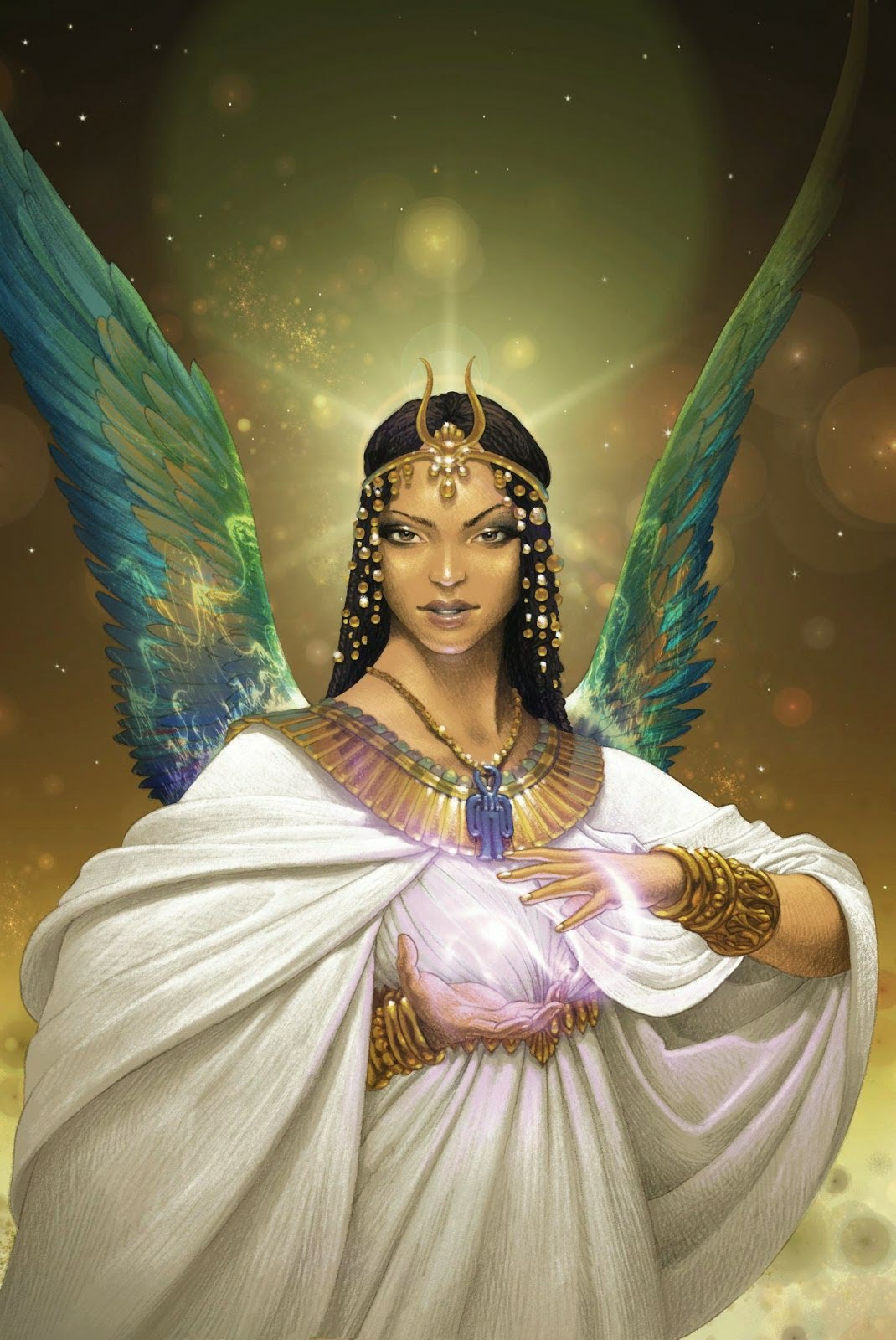 Isis: The Egyptian goddess of magic and maternity. She was born on the fourth day of the Demon Days. Her parents are Geb and Nut, while her siblings in her first life were Horus, Osiris, Nephthys, and Set. In another life, Isis was reborn as Osiris' wife and Horus' mother. Isis was born as a result of the union between Geb and Nut, and eventually married her once-brother, Osiris. In a devious plot for her husband to become king of the gods, she poisoned the current king Ra, but feigned innocence. As he grew close to death, Isis told him she could heal him if she had his secret name. Desperate, he agreed, but Isis also gained control over Ra. After healing Ra, Isis forced him to leave the Earth, allowing Osiris to take his place as king. Isis and Osiris had a child, Horus, after their marriage.
This ultimately resulted in the ancient clash between Osiris and Set, who had been Ra's faithful lieutenant. Osiris was eventually tricked by Set. Isis, still pregnant with Horus, was forced to go on the run. She gave birth to Horus while hiding from Set, and Horus eventually sought revenge for his father. Although Horus was successful, he did chop off his mother's head when she attempted to stop him from attacking while still weak; she was healed by Thoth later. It is revealed she stopped him from killing Set.
When Serapis came to the power, he defeated Zeus, Hades and Osiris, but he fell in love with Isis and then forced her to become his wife and Queen, when Serapis was gone, Isis was happy to be free from him. The ancient Egyptians called her, "She Who Knows the Names". In order to cast a spell or curse on someone, their secret name has to be known. When a child was born the mother would give a child two names - one the child was known by and one only the mother and Isis knew.
Isis: The Egyptian goddess of magic and maternity. She was born on the fourth day of the Demon Days. Her parents are Geb and Nut, while her siblings in her first life were Horus, Osiris, Nephthys, and Set. In another life, Isis was reborn as Osiris' wife and Horus' mother. Isis was born as a result of the union between Geb and Nut, and eventually married her once-brother, Osiris. In a devious plot for her husband to become king of the gods, she poisoned the current king Ra, but feigned innocence. As he grew close to death, Isis told him she could heal him if she had his secret name. Desperate, he agreed, but Isis also gained control over Ra. After healing Ra, Isis forced him to leave the Earth, allowing Osiris to take his place as king. Isis and Osiris had a child, Horus, after their marriage.
This ultimately resulted in the ancient clash between Osiris and Set, who had been Ra's faithful lieutenant. Osiris was eventually tricked by Set. Isis, still pregnant with Horus, was forced to go on the run. She gave birth to Horus while hiding from Set, and Horus eventually sought revenge for his father. Although Horus was successful, he did chop off his mother's head when she attempted to stop him from attacking while still weak; she was healed by Thoth later. It is revealed she stopped him from killing Set.
When Serapis came to the power, he defeated Zeus, Hades and Osiris, but he fell in love with Isis and then forced her to become his wife and Queen, when Serapis was gone, Isis was happy to be free from him. The ancient Egyptians called her, "She Who Knows the Names". In order to cast a spell or curse on someone, their secret name has to be known. When a child was born the mother would give a child two names - one the child was known by and one only the mother and Isis knew.
 Horus: The Egyptian god of war and the sky. Originally, he was the son of Geb and Nut, born on the second Demon Day. Later, he was reborn to Osiris and Isis. Horus was originally born on the second Demon Day, the second son of Geb and Nut, the personifications of the heavens and the Earth, respectively. In a later life, he would be reborn as the son of Osiris and Isis, otherwise known as "Horus the Younger" or "Horus the Child". After his father, Osiris, was murdered by his uncle, Set, Isis hid the infant Horus away and began training him to avenge his father's death and reclaim the throne as pharaoh of Egypt. When he came of age, Horus eventually recovered the casket in which his father was imprisoned. However, before he could free Osiris, Set destroyed the casket, scattering its remains all across Egypt. Enraged, Horus attacked his uncle, facing off against Set in a series of battles, in which he ultimately emerged victorious. Set was then driven out to the desert, far beyond Egypt's borders, as Horus assumed the throne as the new pharaoh. As pharaoh, Horus reinstated much of his parents' policies, and eventually reunited Egypt, for which he came to be known as Horu-Sema-Tawy ("Horus, uniter of the two lands"). He soon took the goddess Hathor for his wife, siring four sons - Imsety, Duamutef, Hapi, and Qebehsenuef. As the god of the sky, Horus was the patron and protector of the pharaoh, and he often instructed them in the art of war.
During his battle with Set, the god ripped out one of Horus' eyes, as the latter retaliated by puncturing one of Set's testicles. The eye was later replaced by the god Thoth using moonlight - this "Eye of Horus", as it is known, served to represent the waxing and waning phases of the moon, during which the moon appears to have been "torn out" of the sky before being "restored" once every lunar month. After Ra left the Earth, the Egyptians believed that Horus had taken his place as the sun god. In some stories, the various forms of Horus (baby, teenager, and adult) represented the path of the sun, with the infant Horus being the sun at dawn, teenager at noon, and adult at dusk. Furthermore, stories differed as to what Horus' exact parentage is. Some claim him to be the son of Isis while others state he is the son of Nut. But mostly, it has been organized that Horus was reborn to Isis and Osiris during the ages.
Horus: The Egyptian god of war and the sky. Originally, he was the son of Geb and Nut, born on the second Demon Day. Later, he was reborn to Osiris and Isis. Horus was originally born on the second Demon Day, the second son of Geb and Nut, the personifications of the heavens and the Earth, respectively. In a later life, he would be reborn as the son of Osiris and Isis, otherwise known as "Horus the Younger" or "Horus the Child". After his father, Osiris, was murdered by his uncle, Set, Isis hid the infant Horus away and began training him to avenge his father's death and reclaim the throne as pharaoh of Egypt. When he came of age, Horus eventually recovered the casket in which his father was imprisoned. However, before he could free Osiris, Set destroyed the casket, scattering its remains all across Egypt. Enraged, Horus attacked his uncle, facing off against Set in a series of battles, in which he ultimately emerged victorious. Set was then driven out to the desert, far beyond Egypt's borders, as Horus assumed the throne as the new pharaoh. As pharaoh, Horus reinstated much of his parents' policies, and eventually reunited Egypt, for which he came to be known as Horu-Sema-Tawy ("Horus, uniter of the two lands"). He soon took the goddess Hathor for his wife, siring four sons - Imsety, Duamutef, Hapi, and Qebehsenuef. As the god of the sky, Horus was the patron and protector of the pharaoh, and he often instructed them in the art of war.
During his battle with Set, the god ripped out one of Horus' eyes, as the latter retaliated by puncturing one of Set's testicles. The eye was later replaced by the god Thoth using moonlight - this "Eye of Horus", as it is known, served to represent the waxing and waning phases of the moon, during which the moon appears to have been "torn out" of the sky before being "restored" once every lunar month. After Ra left the Earth, the Egyptians believed that Horus had taken his place as the sun god. In some stories, the various forms of Horus (baby, teenager, and adult) represented the path of the sun, with the infant Horus being the sun at dawn, teenager at noon, and adult at dusk. Furthermore, stories differed as to what Horus' exact parentage is. Some claim him to be the son of Isis while others state he is the son of Nut. But mostly, it has been organized that Horus was reborn to Isis and Osiris during the ages.
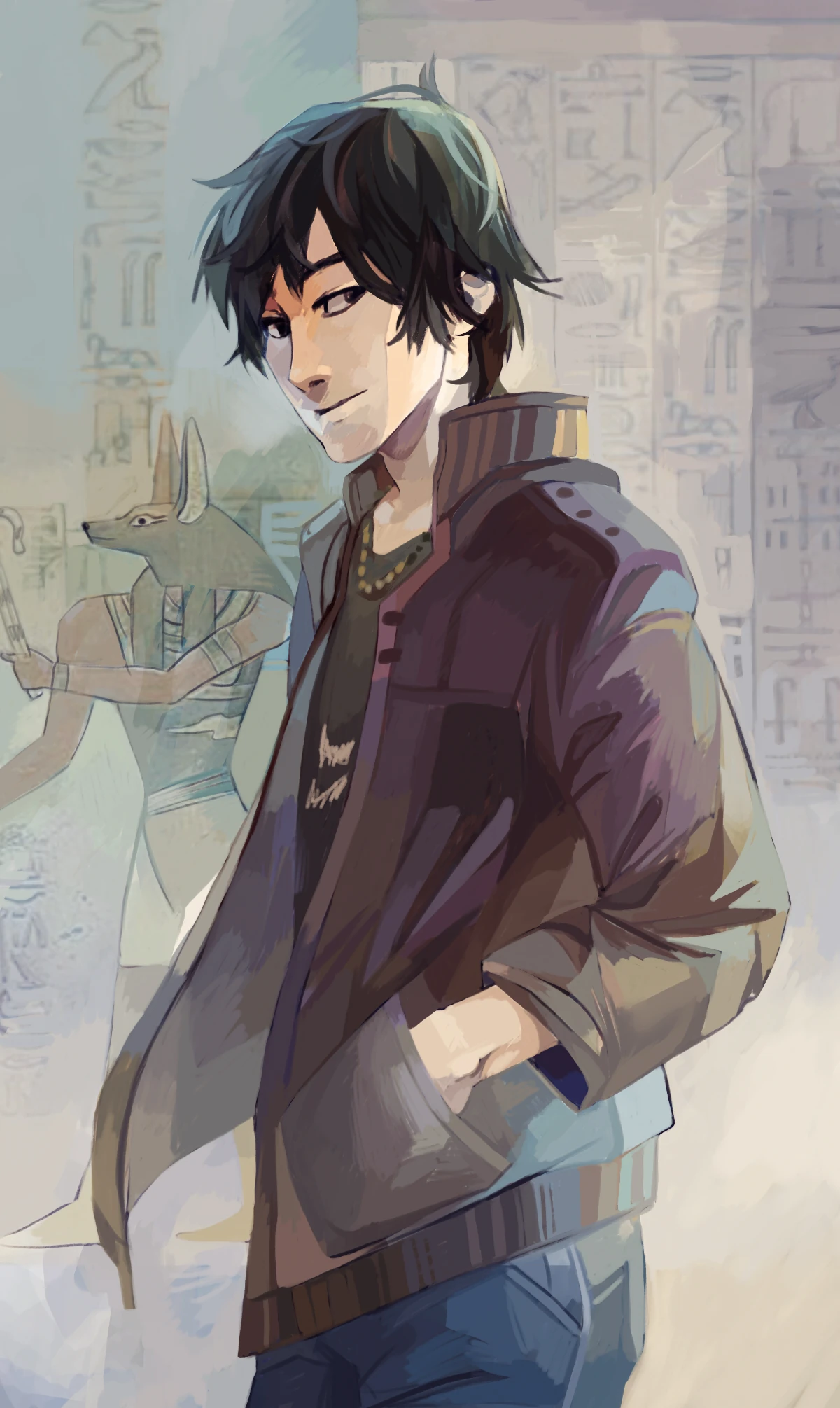 Anubis: The Egyptian god of death and funerals. His parents are Nephthys and Set, but he was raised by Osiris and Isis. Anubis is currently the only remaining Egyptian god left on Earth, having taken on the host of Walt Stone to live a mortal life. Anubis/Walt is Sadie Kane's boyfriend. Anubis was born to Nephthys and Set, but was immediately given to Osiris and Isis by Nephthys; he claimed that she did not want him to know his father. Anubis himself is skeptical of this, knowing that he is a "different" child, and is not a warrior. In early Egyptian mythology, Anubis has different parentage. Rather than the son of Set, he is the son of Osiris and Nephthys, the result of the goddess tricking Osiris. Nephthys' betrayal played a role in Set's desire to kill Osiris. Later in mythology, however, it does describe him as Set's son.
Anubis was one of the most important of Egyptian gods. When a corpse was mummified the priests wore jackal-headed masks and prayed to Anubis. At the tomb, the priest held the mummy during the Opening of the Mouth ceremony to give the dead person the power to eat, move and breathe. Anubis is also the only deity who is allowed to do the Opening of the Mouth ceremony.
Anubis: The Egyptian god of death and funerals. His parents are Nephthys and Set, but he was raised by Osiris and Isis. Anubis is currently the only remaining Egyptian god left on Earth, having taken on the host of Walt Stone to live a mortal life. Anubis/Walt is Sadie Kane's boyfriend. Anubis was born to Nephthys and Set, but was immediately given to Osiris and Isis by Nephthys; he claimed that she did not want him to know his father. Anubis himself is skeptical of this, knowing that he is a "different" child, and is not a warrior. In early Egyptian mythology, Anubis has different parentage. Rather than the son of Set, he is the son of Osiris and Nephthys, the result of the goddess tricking Osiris. Nephthys' betrayal played a role in Set's desire to kill Osiris. Later in mythology, however, it does describe him as Set's son.
Anubis was one of the most important of Egyptian gods. When a corpse was mummified the priests wore jackal-headed masks and prayed to Anubis. At the tomb, the priest held the mummy during the Opening of the Mouth ceremony to give the dead person the power to eat, move and breathe. Anubis is also the only deity who is allowed to do the Opening of the Mouth ceremony.
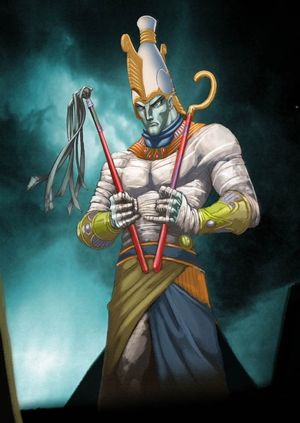 Osiris: The Egyptian god of the dead and the living. Originally the god of agriculture, Osiris is the son of Geb and Nut as well as the brother of Horus, Isis, Nephthys, and Set. He was later reborn as Horus' father and Isis' husband. Osiris succeeded Ra as king of the gods until his death by Set's hand. After his resurrection, Osiris was made the king of the afterlife. His symbols are the crook and flail. Originally, Osiris was born on the first of the Demon Days (December 27th on a modern calendar) as the eldest child of Geb and Nut with Horus, Isis, Nephthys, and Set as his siblings. In a second life, Isis would become his wife with Horus as their son. When Ra was forced to abdicate the throne of Egypt, Osiris claimed it and ruled over the earth with Isis as his queen but he also became the object of Set's hatred and jealousy.
Osiris' reign came to an abrupt end when Set, aided by 26 followers, tricked his brother into lying inside an elaborate jeweled golden coffin and drowned him in molten lead. Though Osiris' body was recovered some time after by Isis, Set shattered it to pieces and scattered them over all of Egypt. Isis would eventually recover the body pieces and at last revive Osiris, but it was a limited success. Osiris could not be fully resurrected, so he departed for the Land of the Dead in the Duat, where he would rule as king, and become a thousand times more powerful than before. His death would later be avenged when his son Horus won back the throne from Set.
Osiris: The Egyptian god of the dead and the living. Originally the god of agriculture, Osiris is the son of Geb and Nut as well as the brother of Horus, Isis, Nephthys, and Set. He was later reborn as Horus' father and Isis' husband. Osiris succeeded Ra as king of the gods until his death by Set's hand. After his resurrection, Osiris was made the king of the afterlife. His symbols are the crook and flail. Originally, Osiris was born on the first of the Demon Days (December 27th on a modern calendar) as the eldest child of Geb and Nut with Horus, Isis, Nephthys, and Set as his siblings. In a second life, Isis would become his wife with Horus as their son. When Ra was forced to abdicate the throne of Egypt, Osiris claimed it and ruled over the earth with Isis as his queen but he also became the object of Set's hatred and jealousy.
Osiris' reign came to an abrupt end when Set, aided by 26 followers, tricked his brother into lying inside an elaborate jeweled golden coffin and drowned him in molten lead. Though Osiris' body was recovered some time after by Isis, Set shattered it to pieces and scattered them over all of Egypt. Isis would eventually recover the body pieces and at last revive Osiris, but it was a limited success. Osiris could not be fully resurrected, so he departed for the Land of the Dead in the Duat, where he would rule as king, and become a thousand times more powerful than before. His death would later be avenged when his son Horus won back the throne from Set.
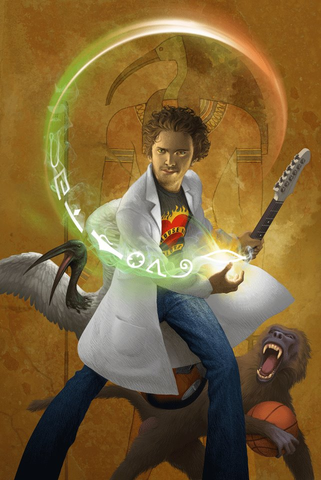 Thoth: Also known as Djehuti, is the Egyptian god of writing. He is the eldest of Ra's sons and the loyal scribe of Ma'at. His animal is the baboon. When Set imprisoned Osiris, Thoth attempted to mediate an agreement, but Isis convinced him that he should join sides with her and Horus. During his battle with Set, Horus had one of his eyes torn out; Thoth replaced it with moonlight, creating the Eye of Horus. He also had to heal Isis when Horus inadvertently cut off her head when she attempted to stop him from fighting Set while weakened.
Thoth was also the grand vizier when Ra, Shu, Geb, Osiris, and Horus ruled as pharaohs. When Horus, the last pharaoh, chose to leave the mortal world, he made Thoth his successor and he ruled peacefully for over 3,000 years. As mentioned in The Red Pyramid, Thoth plays an important role in the birth of Nut's children. In the myth, Nut goes to him for advice after Ra forbids her from giving birth on any day of the year. He comes up with the idea of gambling with Khonsu and helps Nut create five new days with moonlight. However, in the original myth, it was Thoth himself who did the gambling, and Thoth bet his secret knowledge, which Khonsu desired out of jealousy. After winning, he became a moon god (there were multiple).
Thoth is also credited by the Ancient Egyptians for revealing hieroglyphics, medicine, and astronomy (as part of his association as a moon god).
Thoth is also associated with justice, and the phrase "straight and true like Thoth" was used to show impartiality when judging a situation and/or crime. He was also known for being persuasive, as seen in the books when he convinces the House of Life to abandon the Path of the Gods.
Thoth also generally played a large role in mythology, and was believed to have been the one to civilize human kind. At one point, he was even considered one of the creators of the world.
Seshat was sometimes said to be either his daughter or wife, and Ma'at was also said to be his wife at times.
Thoth: Also known as Djehuti, is the Egyptian god of writing. He is the eldest of Ra's sons and the loyal scribe of Ma'at. His animal is the baboon. When Set imprisoned Osiris, Thoth attempted to mediate an agreement, but Isis convinced him that he should join sides with her and Horus. During his battle with Set, Horus had one of his eyes torn out; Thoth replaced it with moonlight, creating the Eye of Horus. He also had to heal Isis when Horus inadvertently cut off her head when she attempted to stop him from fighting Set while weakened.
Thoth was also the grand vizier when Ra, Shu, Geb, Osiris, and Horus ruled as pharaohs. When Horus, the last pharaoh, chose to leave the mortal world, he made Thoth his successor and he ruled peacefully for over 3,000 years. As mentioned in The Red Pyramid, Thoth plays an important role in the birth of Nut's children. In the myth, Nut goes to him for advice after Ra forbids her from giving birth on any day of the year. He comes up with the idea of gambling with Khonsu and helps Nut create five new days with moonlight. However, in the original myth, it was Thoth himself who did the gambling, and Thoth bet his secret knowledge, which Khonsu desired out of jealousy. After winning, he became a moon god (there were multiple).
Thoth is also credited by the Ancient Egyptians for revealing hieroglyphics, medicine, and astronomy (as part of his association as a moon god).
Thoth is also associated with justice, and the phrase "straight and true like Thoth" was used to show impartiality when judging a situation and/or crime. He was also known for being persuasive, as seen in the books when he convinces the House of Life to abandon the Path of the Gods.
Thoth also generally played a large role in mythology, and was believed to have been the one to civilize human kind. At one point, he was even considered one of the creators of the world.
Seshat was sometimes said to be either his daughter or wife, and Ma'at was also said to be his wife at times.
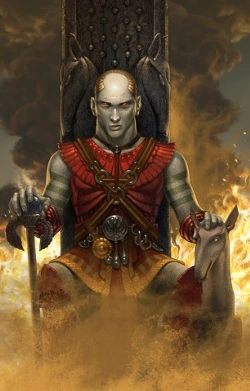 Set: The Egyptian god of deserts, storms, strength, chaos, and evil. He is the son of Geb and Nut, as well as the brother of Horus, Isis, Osiris, and Nephthys. Later, Horus would become his nephew and Nephthys would become his wife. He is the main antagonist of The Red Pyramid, but a minor supporting protagonist in the rest of the series. Set, also called Seth, was born on the third Demon Day (December 29) to Geb and Nut as their third child. In time, Set would become the most powerful servant of Ra and was chiefly responsible for protecting him from Apophis. When Ra withdrew, Set was entrusted with protecting a third of the Book of Ra, which would awaken him. After his rebirth, Set married his former sister, Nephthys and fathered an estranged son named Anubis with her. When Osiris became king of the gods, Set refused to stand for it and planned to kill him. During the king's birthday celebration, he trapped Osiris inside a magnificent sarcophagus and poured molten lead into it. Declaring himself ruler, he relentlessly hounded a pregnant Isis who would give birth to a reborn Horus and resurrect Osiris. Although Osiris could not be truly revived, Horus would go on to avenge his father's murder by dethroning Set. Set was originally a major god of Upper Egypt. He was viewed as a benevolent god and protector, though he has a long history of feuding with Horus. When Upper and Lower Egypt merged, the followers of Horus gained power and increasingly demonized Set. He went from being a chief god to Ra's protector, to being merged with Apophis. Despite this, he was still in some areas a major god and has had several revivals.